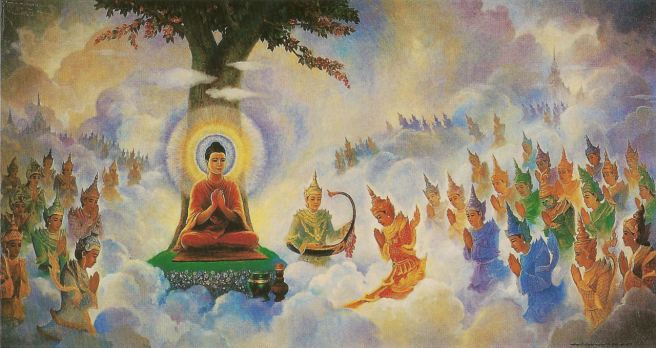
The advent of the Shakyamuni Buddha brought a revolution in the systems of philosophy and spirituality in India. When Siddharth Gautam was born, there were different spiritual traditions and philosophical views of Vedic, Samkhya and Jain traditions. Siddharth, not having convinced and satisfied with the answers for his queries, went in search of a path to liberate from the suffering of samsara. After his enlightenment at Bodhgaya, Buddha gave his first teaching on the Four Noble Truths at Sarnath.
In this discourse, he laid down the structural foundation of the Buddhist spiritual system and philosophical views, which provided a fundamental shift from the prevailing trends of the spiritual practice and philosophical thought in India. In this teaching, he demonstrated a set of cause and effect pertaining to engagement in saṃsāra, that is, the truth of suffering and the truth of the origin of suffering and the set of cause and effect related to the achievement of nirvana, that is, the truth of cessation and the truth of the path that leads to the cessation of suffering. The teaching reflects on the causality of the engagement in and liberation from samsara demonstrating that both are possible only through the accomplishment of their causes and conditions.
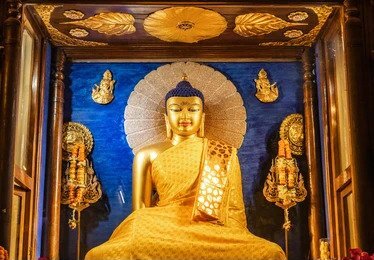
His teachings are characterized by the rejection of the extremes both in terms of the philosophical views and conduct, and thus upholding the Middle path in the pursuit of spiritual realization for the elimination of mental defilements. The mental defilements cannot be eliminated through ritual performances nor through the grace of any supernatural Being. The Buddha wholly disagreed with such a possibility. Rather, he advised to strive oneself to get rid of the defilements or the mental afflictions by applying the mental processes through meditational procedures. The Buddha's entire teachings are for the elimination of the negative mental forces and development of positive mental forces with which one could be liberated and enlightened.
The entire teachings of the Buddha are categorized in the three vessels, the three pitakas, on the basis of the three different contents of the teachings, sikkhā or śikṣā viz. 1. sīla-sikkhā or śīla-śikṣā, 2. samādhi-sikkhā or Samādhi-Śikṣā and 3. paññā-sikkhā or the Prajñā-Śikṣā.
Sīla-sikkhā or śīla-śikṣā, the content of the vinayapitaka contains the moral conducts of the monastics as well as that of the lay people. Out of eighteen schools only three schools have survived: Theravāda, Dharmaguptika, and Mūlasarvāstivāda. The comprehensive codes of conducts detailed in each of these three traditions are identical with a few minor ones which are different in the manner of their presentation. In the recent past a number of meetings of the senior monks from these traditions took place where it was noticed that the vinaya practices in all of the traditions are same. Besides the whole system of monastic code of conducts, there is a vast literature on the moral conducts to be observed by upasakas and upasikas. Other suttas in Pali also contain contents of sīla, moral conducts, just as Silakhandha in MajjhimNikāya. Similarly, in Sanskrit tradition there are many sutras covering sīla for general Buddhist followers. Abstinence of the three bodily and the four verbal misdeeds are emphasized as the basis of moral conduct. Through the training in the moral conducts, one paves the way to enter into the training of concentration, Samadhi - which otherwise is not possible. The training of moral conduct moulds the person to control greed, craving, attachments, hatred, anger, jealousy etc.
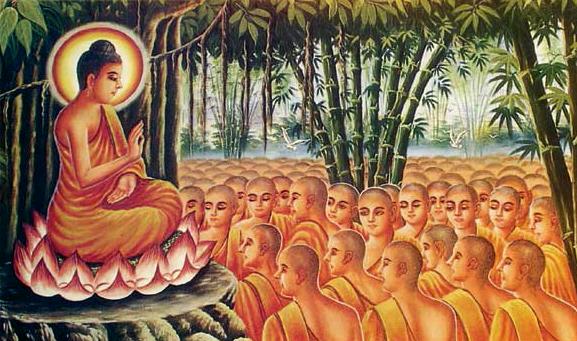
Contentment is an essential quality to be cultivated in Buddhist spiritual system, the training for which, begins from the sīlasikkha . It is extremely important to draw the attention of the modern society to the fact that insatiable craving is the root of the all problems that we are facing at the global level. However, on the contrary, according to modern civilisation, insatiability of craving is not only seen as a main cause of problems, rather it is promoted with the idea that it can lead to more demand and supply system leading to higher elevation of development and prosperity.
The samadhi sikkhā or the samadhi śikṣā is primarily the training of the mind to achieve single pointed concentration through meditational processes. When mental and physical pliancy is achieved with the accomplishment of samath, the mind becomes capable to engage in any meditational processes to encounter afflictive mental elements and cultivate positive mental elements. Hence in both traditions of Pali and Sanskrit, there is equally a strong emphasis on the practices of samatha/śamatha , satipaṭṭhāna/smṛtiprasthāna, ariyaaṭṭhaṅgikomaggo/āryaāṣṭāṅgikamārga. There are also other practices of training the mind with detailed methodology of regulating the emotions such as anger, hatred, jealousy, attachment and so on with the application of their antidotes such as patience, equanimity, compassion, loving kindness and the ways to cultivate and enhance them.
As a result of interaction between Buddhism and modern science, in the recent decades, there has been many ground breaking findings, particularly, in the field of emotion that the researches based on the Buddhist account of emotion and their methodologies of regulation of emotions have proven to be immensely effective. Hence, these are, nowadays, being introduced in the school curriculum which has brought transformation among the students thereby changing the atmosphere of schools. Similarly, it is bringing changes in the public life and clinical domain through the practice of mind training. These are in fact reality of the system of mind and the practices in the tradition coming down to this day which are experimented and researched by the scientists and introduced for therapeutic values in a secular.